

Four separate conversations with client executives about the capabilities of Generative AI and its applicability to specific workflows within their respective organizations inspired this article.
Most of you are probably unfamiliar with Mermaid and PlantUML. Both supplement the popular Markdown syntax to allow for the creation of many types of diagrams, such as process flows and organization charts.
While you may be unfamiliar with them, Large Language Models (LLMs) such as ChatGPT know them quite well.
I prompted ChatGPT as follows: “Please create markdown for a PlantUML activity diagram that goes from left to right, connecting Step 1 to Step 2, etc. up to Step 5. Also, add "Process Diagram Example" as a title.”
It generated the following:
@startuml

title Process Diagram Example

(*) -right-> "Step 1"
-right-> "Step 2"
-right-> "Step 3"
-right-> "Step 4"
-right-> "Step 5"
-right-> (*)

@enduml
When you enter this into the PlantUML editor (or place it in a Markdown text file on a system that can render PlantUML), it produces the following diagram:

It was that easy to create a diagram.
If you prompt ChatGPT to create content other than text, such as presentations (PowerPoint, Keynote), spreadsheets (Excel, Numbers), or mind maps (Mind Manager, Mural) you’ll get a response telling you that it doesn’t have such capabilities.
That’s because there is no simple, text-based specification language for these and other content types, so LLMs cannot learn and then generate them. My crystal ball is telling me that content-creation software providers need to remedy this situation ASAP.
Company executives see the content created by LLMs and naturally ask if such tools can help with the many other types of content produced within their organizations. They cannot—yet.
Other companies are attempting to fill these gaps. If any company or set of companies succeeds at scale, it will be easy for users to switch to open document formats and eliminate the demand for proprietary formats.
For example, Tome and Gamma are just two of many companies attempting to create presentations from text. Currently, they are facing some hurdles in converting text prompts to (I am assuming) computer code that generates the desired file formats or populates pre-existing templates.
Following the examples of Mermaid and PlantUML, I created a simple specification language for PowerPoint, then used Python to parse the specification and generate the slides.
Here is the specification, which could be generated by a LLM. Some of the formatting information may be too much to specify using natural language. It would be easier to write or speak the words required to build the basic document and then add formatting by hand, but either would work.
Slide1:
    Type: TitleSlide
    Title: Example Presentation

Slide2:
    Type: TitleAndContent
    Title: Some Bullet Points of Interest
    ContentStart
        Bullet1: Most important point
        Bullet2: Less imporant point
        Bullet3: FYI
        Bullet3.1: More FYI
    ContentEnd

Slide3:
    Type: TitleOnly
    Title: Sample Process Diagram
    ContentStart
        ProcessStart
            SettingsStart
                Direction: LeftToRight,
                ShapeType: Rectangle,
                ShapeColor: #Navy,
                OutlineColor: #Black,
                Font: Arial,
                FontColor: #White,
                FontSize: 16,
                FontStyle: Bold,
                HTextAlign: Center,
                VTextAlign: Middle
            SettingsEnd
            "Step 1" ->
            "Step 2" ->
            "Step 3" ->
            "Step 4" ->
            "Step 5"
        ProcessEnd
    ContentEnd
And here is the result (the Python library I was using doesn’t support the creation of connectors between shapes, so they do not appear on the process diagram slide):
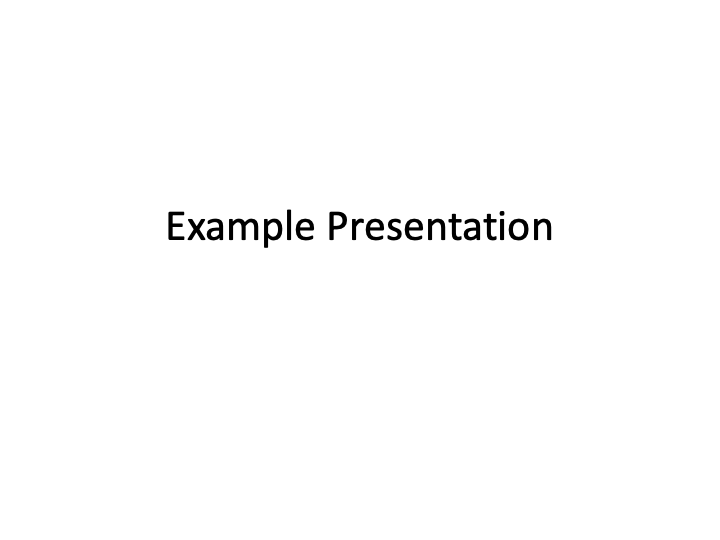
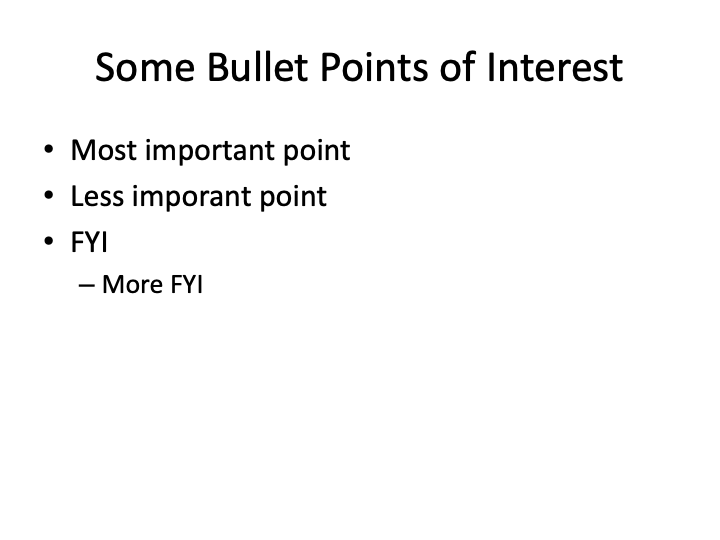
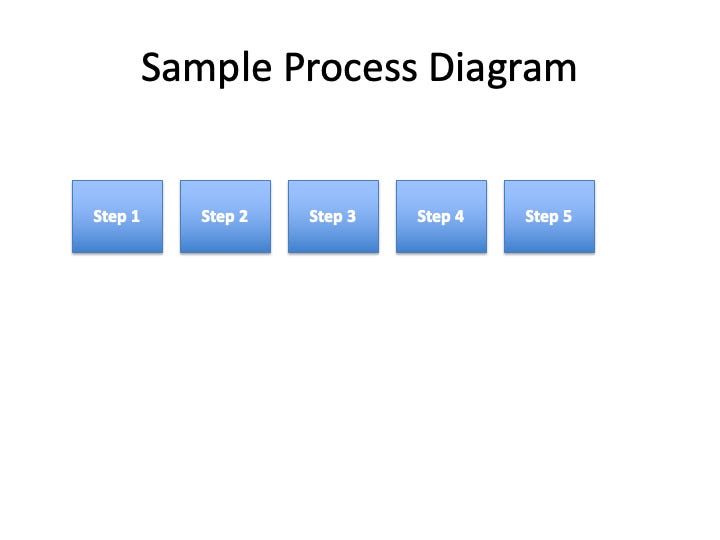
I also built an ExcelGPT app that uses natural language prompts to analyze data (sales data from Kaggle) and create charts (see Figure 2). It wouldn’t be a stretch to create charts and insert them into presentations that are specified in this simple specification language.

As I wrote, many startups are trying to fill this content creation gap. It makes more sense for the software providers to do this themselves in response to increasing market demand for such functionality and to protect their existing positions.
That’s why I am issuing this call to action. Will these companies respond? Will they respond quickly enough to thwart new market entrants? We’ll have to wait and see.
Wow, this is super insightful! I had no idea ChatGPT could work with Mermaid for diagrams. Just followed a mermaid flowchart tutorial last week, and it blew my mind how easy it is. Hoping more tools adopt this approach—imagine making PPTs just by typing! Keep these articles coming, super useful stuff.
https://mermaidviewer.com/