

Best business article(s) I read this week…
The Crowdless Future? Generative AI and Creative Problem-Solving
This Harvard Business School Working Paper presents findings from a study that compares business ideas generated by humans working alone and humans working with AI. Their findings show that human-only solutions demonstrated greater novelty, but human-AI-generated ideas were superior regarding strategic viability, environmental and financial value, and overall quality. A key insight is that human-guided AI solutions, especially those using differentiated search techniques, outperform independent AI searches in generating more innovative outputs.
Rewiring the way McKinsey works with Lilli, our generative AI platform
This is a case study published by McKinsey & Company detailing how it uses generative AI as a knowledge management platform. It’s a quick read with lots of interactive graphics.
Best technical article(s) I read this week…
OLMoE: An open, small, and state-of-the-art mixture-of-experts model
The Allen Institute for AI (AI2), in conjunction with Contextual AI, released OLMoE, an open-source Mixture of Experts (MoE) model. As the authors write, “mixture-of-experts architectures have become a core technology used by closed AI labs to more efficiently serve and train leading language models.” The source code, the training data, the training performance data, and the research paper are all available from the link above.
Configurable Foundation Models: Building LLMs from a Modular Perspective
This article describes a method for the modular construction of large language models (LLMs) that breaks them into functional components called "bricks." These bricks can be emergent (formed during pre-training) or customized (added post-training), enabling efficient LLM updates, scaling, and task specialization. This approach optimizes computational efficiency, reusability, and adaptability.
Other items I found valuable/interesting…
How digital twins could save time, money, and lives in developing prescription drugs
The article discusses how digital twins are revolutionizing drug development by simulating human organs, cellular structures, and patient health conditions. These simulations can predict outcomes in clinical trials, streamline drug discovery, and improve the personalization of treatments.
Augmented tomorrow: Augmented Reality (AR) experiences beyond smartphones
This Ericsson ConsumerLab report presents research findings from 10 global markets on augmented reality and mixed reality (MR) trends. Two key findings:
The number of consumers combining smartphones and AR devices will double in the next five years.
Consumers want on-the-go AR devices and are willing to pay 20 percent more for portability.
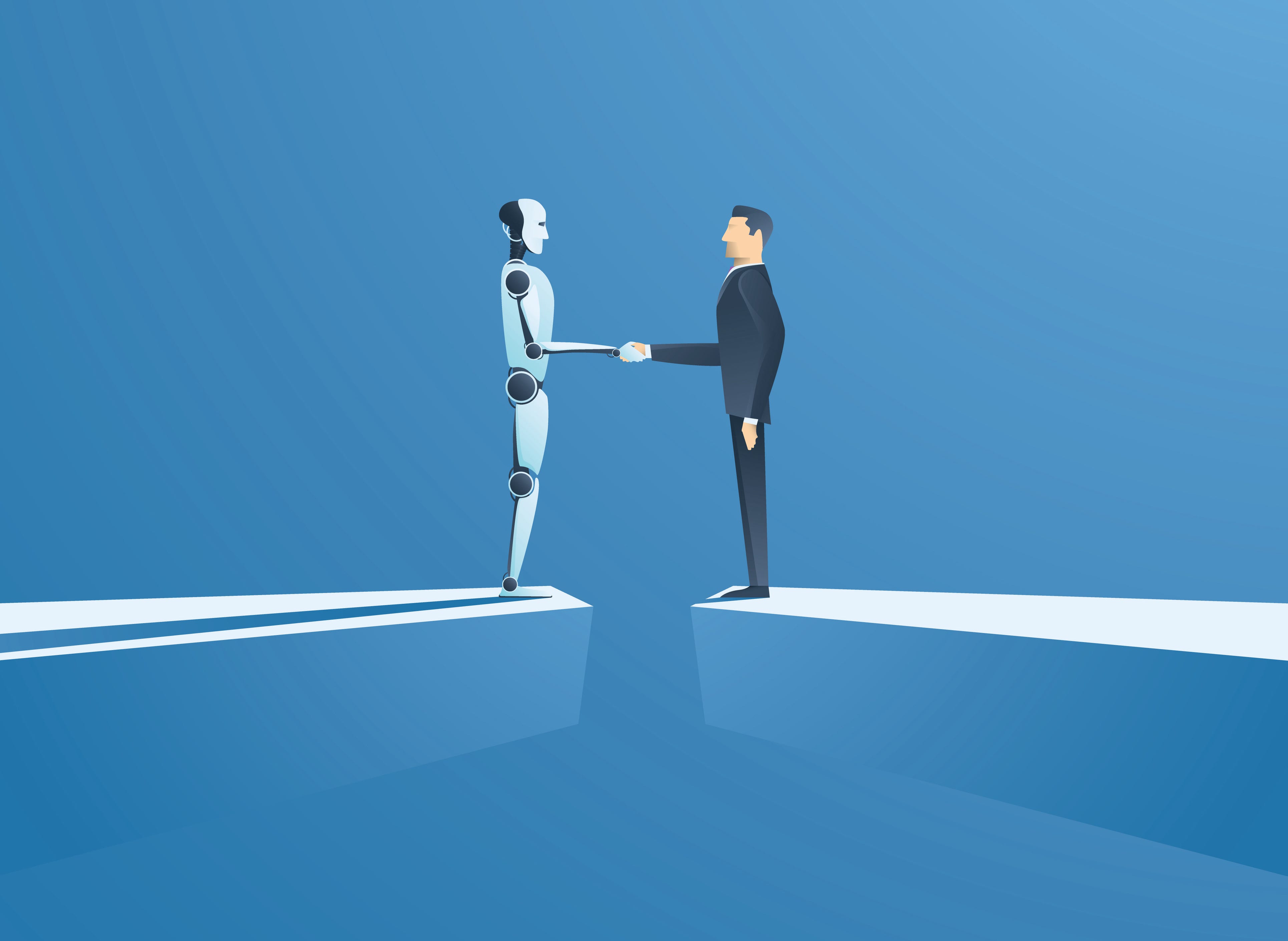
Automation’s Biggest Challenges: Full Human-Robot Collaboration
This Association for Advancing Automation article summarizes how collaborative robots are used today and identifies what other advancements are required to achieve “full collaboration.”
Coolest thing I saw…
This short fiction piece envisions what life will be like 125 years from now. It may not be “cool” in the strictest sense, but it was thought-provoking.
A company that caught my eye…
When it was announced, I wrote about Illya Sutskever’s (OpenAI co-founder and its former Chief Scientist) new startup. It caught my eye again this week when it announced it had closed a $1B SEED round. Not a seed round that produced a $1B post-money valuation. It took in $1B in investment from VCs such as A16Z and Sequoia.