What types of work SHOULD be assigned to intelligent machines?
Part 4 of a 7-Part Series on Using Collaborative Intelligence (CI) to Improve Company Performance
As I wrote previously, when speaking with company executives regarding how best to use Collaborative Intelligence (CI) to improve their company’s performance, I ask seven clarifying questions, the fourth of which is: “Many types of work CAN be assigned to Intelligent Machines (IMs). What type of work SHOULD you assign to them?”
I ask this question to describe four categories (levels) of organizational value created by automating task-level work and to help executives think more clearly and thoroughly about which tasks should be assigned to IMs. Explicitly contemplating this question helps organizations maximize the risk-adjusted value of introducing CI technologies.
Preamble: Yield Curves in Product Development
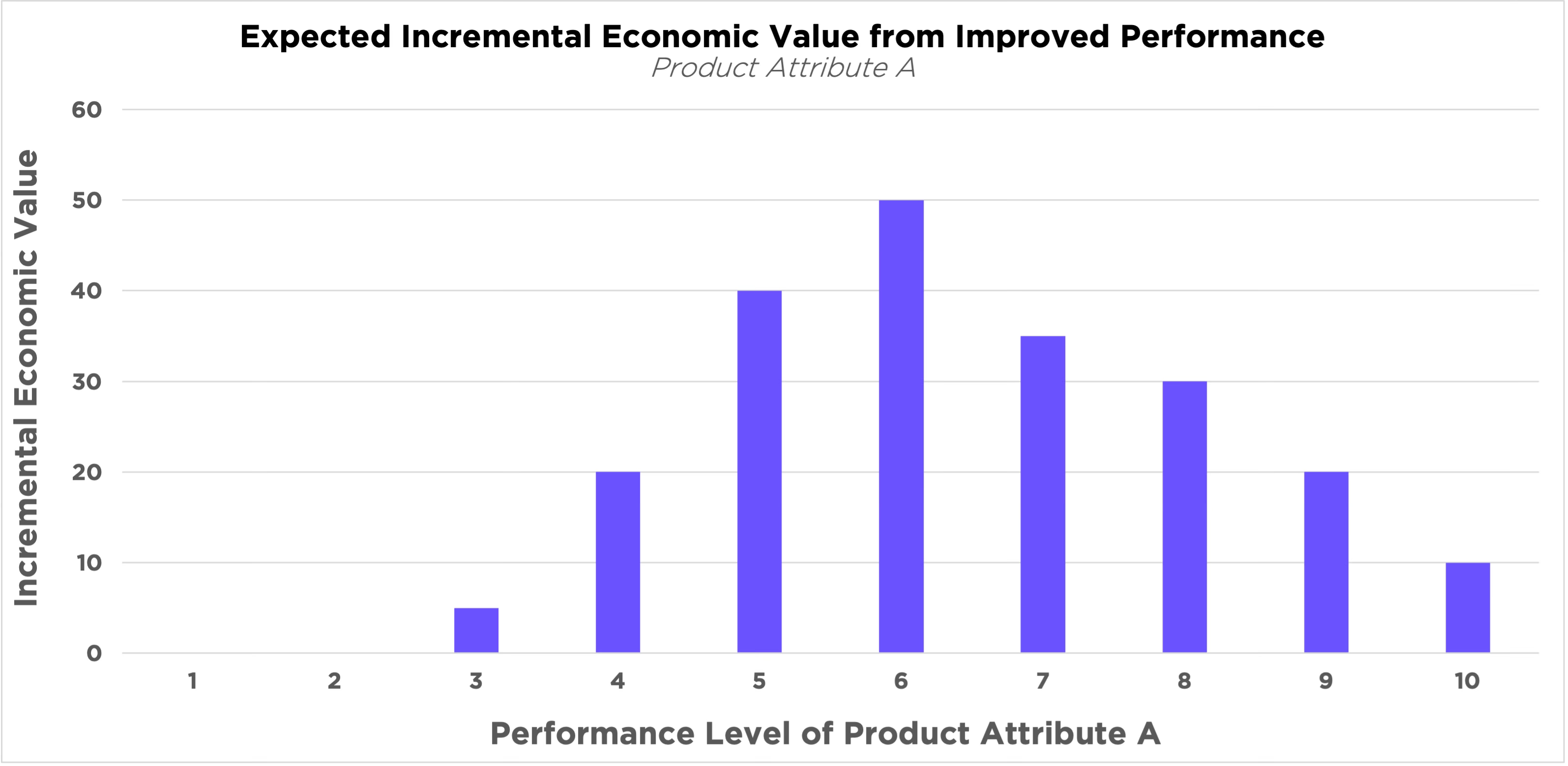
I have developed new products/services and managed large innovation portfolios for several clients. I often use Yield Curves when determining where and how to increase revenues by improving product/service performance. Figure 1 is a generic example of such a curve.
Figure 1
The X-axis shows the absolute performance along a specific product/service dimension. For example, if this were an Electric Vehicle, this dimension might be Operating Range (distance in miles or kilometers would replace the generic values). The Y-axis shows the expected incremental economic value (IVA) created by improving performance along this dimension (values in the appropriate currency would replace the generic values).
IVA is a multi-period function of the CapEx and OpEx required to improve performance along this dimension and the effect such improvement would have on customer selection decisions (e.g., the effect of the changes in performance on things such as the number of units sold and the average purchase price).
If the example above were for a new product, any performance below 4 along this dimension would limit market adoption. Thus, a performance value of 4 might be what some term “table stakes” in this market.
Improving performance from 4 to 6 maximizes IVA, after which it diminishes. Diminishing returns typically result from additional expenditures that increases in revenue cannot cover and because the growth rate in value perceived by customers may flatten out beyond a performance level they deem "good enough."
Yield Curves in Job Design and Task Specification
Despite my long-term use of Yield Curves in product and portfolio management, it never dawned on me to apply a similar concept to the design of jobs until I read Transformative HR by John Boudreau and Ravin Jesuthasan. Dr. Boudreau is Professor Emeritus of Management and Organization and a Senior Research Scientist at USC’s Center for Effective Organizations. Mr. Jesuthasan is the Global Leader of Transformation at Mercer.
In this book, the authors introduce the concept of Return on Improved Performance (ROIP) for specific jobs. They define ROIP as “the degree to which performance improvement in that role or job creates higher value for the organization.”
In a subsequent book, Reinventing Jobs, the authors expand the ROIP concept and apply it to the tasks that comprise a job.
They identify four ROIP categories:
Negative Value: The value derived from this task category results from avoiding mistakes in execution that would create negative value for the organization. Once this level of competency is reached, performance improvements above this level produce no additional organizational value.
For example, a pilot must fly a commercial airliner at a performance level that avoids harm to the passengers, crew, airplane, and airport infrastructure while maintaining the flight schedule given the current environment. Beyond this level of competence, there is no additional organizational value because such performance improvements do not improve customer perceptions of their overall experience.
Constant Value: The value derived from this task category results from meeting an expected level of performance, beyond which no additional value is created (e.g., things must be “good enough” but don’t improve customer value perceptions above this level of performance).
For example, if a large customer majority deems a restaurant to be "clean" (market's performance threshold), spending additional effort to make it "super clean" will not create any additional organization value because doing so would not improve perceived customer value (these are generic categories—there are exceptions).
Incremental Value: The value derived from this task category results from delivering steady performance improvements over time, resulting in a corresponding linear improvement in organizational value.
For example, the Toyota Production System seeks to identify and implement continuous improvements in process or product quality. Each incremental improvement yields incremental organizational value for Toyota.
Exponential Value: The value derived from this task category results from delivering performance improvements from which the company can build or strengthen competitive advantages, resulting in a corresponding exponential improvement in organizational value. [The authors’ use of this term derives from the fact that relatively small performance improvements in important areas can result in significant improvements in organizational value.]
For example, small changes in customer service task execution resulting in improved customer experience could dramatically improve revenues, retention rates, or average lifetime value (depending on the average customer service performance of companies in the market and how much customers value improved service).
Guidelines for Designing CI-Enabled Workflows
The four ROIP categories suggest a few high-level guidelines for designing CI-enabled workflows. Technologies that adhere to these guidelines exist already. CI has the potential to broaden and deepen applications.
(I will dive deeper into this topic, using a comprehensive example that contemplates risk, once the Strategic Questions Series concludes.)
Negative Value
Use CI to “raise the floor” of the workforce to reduce the probability and severity of negative outcomes.
Use CI to offload low-risk tasks that are part of the overall job, freeing humans to focus on preventing negative outcomes.
Avoid assigning (or limit the assignment) to IMs of tasks that could result in negative outcomes and very negative value. If necessary (for example) to provide the throughput or vigilance required to complete the task, ensure human-in-the-loop oversight.
Constant Value
Design CI workflows that meet performance standards while minimizing or eliminating human participation in these tasks. Humans can provide oversight of the execution of these workflows and resulting work products where appropriate.
Incremental Value
Design CI workflows to maximize throughput.
Design CI workflows to enable humans to spend more time performing the highest-value (and uniquely human?) portions of the workflow.
Design CI workflows in ways that put a human “wrapper” on exclusively IM-generated work products.
Exponential Value
Use CI to create/enhance human ability to perform tasks that contribute directly to the organization’s competitive advantage.
Use CI to create new capabilities that become the foundation for new competitive advantages. (This is another way of saying: Don’t focus CI efforts exclusively on doing the same things better or doing the same things differently. Use CI to do different things.)